Sourdough Beignets (with Discard)
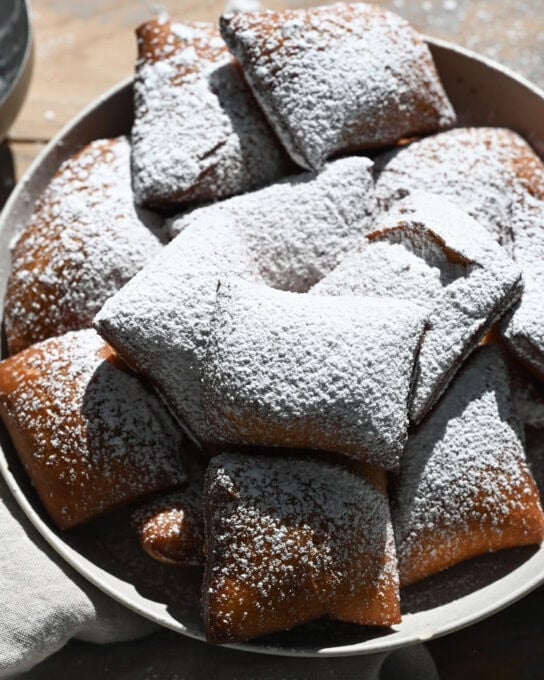
Fluffy pillowy beignets made with sourdough discard. This is an easy, one bowl dough, it rises overnight and will be ready to fry in the morning (or late morning).
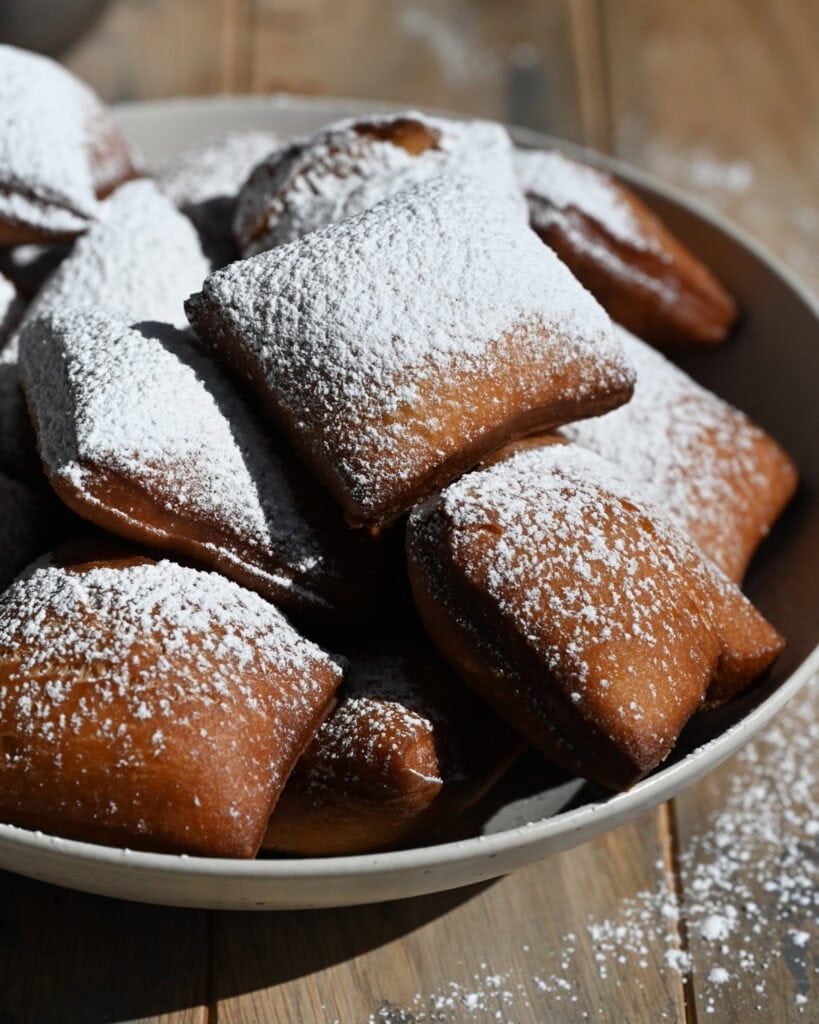
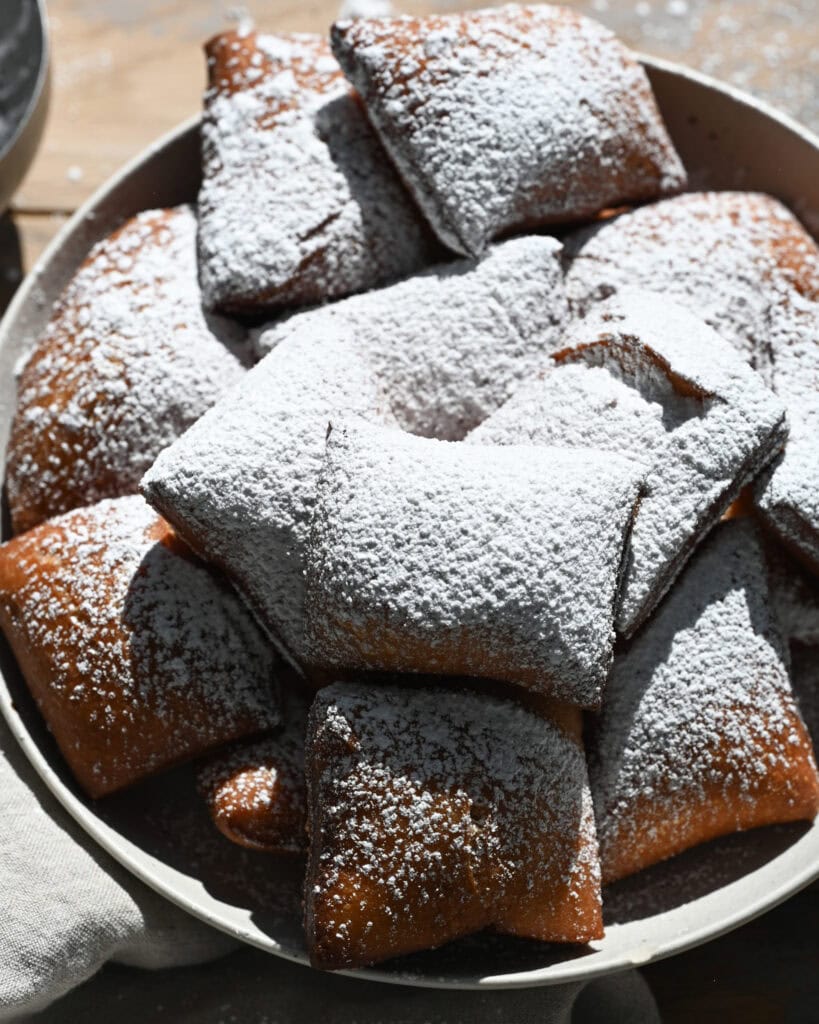
Melt in your mouth beignets with fluffy interiors and crispy edges. These have the added bonus of some sourdough starter added to the dough which makes them tastier and even softer!
Recipe Origins
For this recipe I looked at several beignet recipes and found a fairly standard template to start with: about four cups of flour, a single egg, sugar (this varied in quantity but it was almost always granulated), water or milk (usually evaporated), and yeast. I more or less followed this formula but swapped in brown sugar (I think it gives the dough better flavor), and swapped in some of the flour and liquid for some discard. After a few tests, I also raised the hydration a bit as I wanted softer, more “pillowy” beignets.
I also ask you to rest the dough after rolling out and cutting out the shapes, I think this gives them more ‘poof’ and ‘pillow’ if you will.
Recipe Ingredients
Water: filtered tap water. Ideally it’s slightly warm but it’s ok if it’s not.
Milk: whole milk, warm it to touch only. This way it can activate the yeast.
Yeast: active dry yeast. Rapid rise works too.
Sugar: brown sugar as it adds great flavor. Light or dark works.
Egg: one whole egg.
Starter: I use sourdough discard, leftover starter or inactive. I think an active starter would work too, I’d expect the dough to rise a bit quicker.
Flour: all purpose, of a medium to high protein content.
Butter: softened. Unsalted is best.
Oil: for frying, you can use canola oil or peanut oil.
Powdered sugar: for topping the beignets.
How to make Sourdough Beignets
Note: Make this dough the night before you plan to fry and eat the beignets.
Make the dough
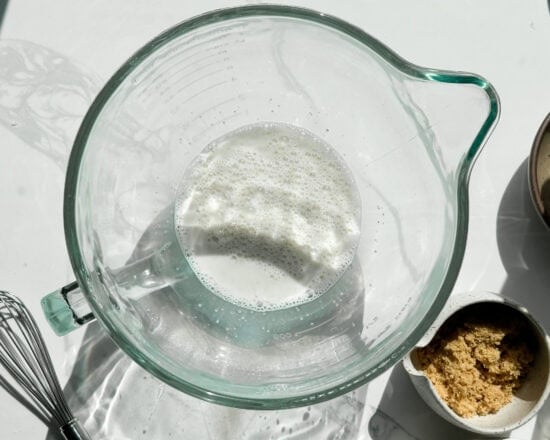
Set the water and flour in the bowl of a stand mixer, add the yeast and let it dissolve/bloom.
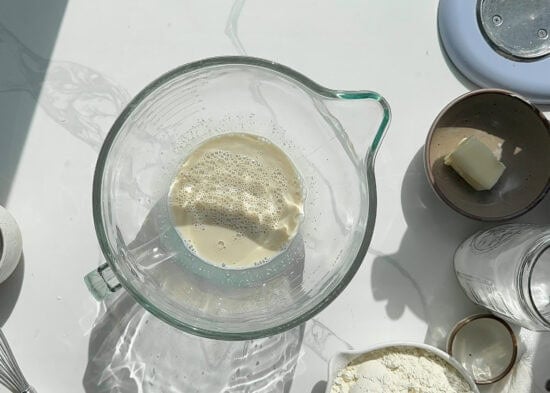
Add the remaining dough ingredients except the butter and affix the dough hook. Turn the mixer to knead on low and as the dough starts coming together around the hook, add the butter.
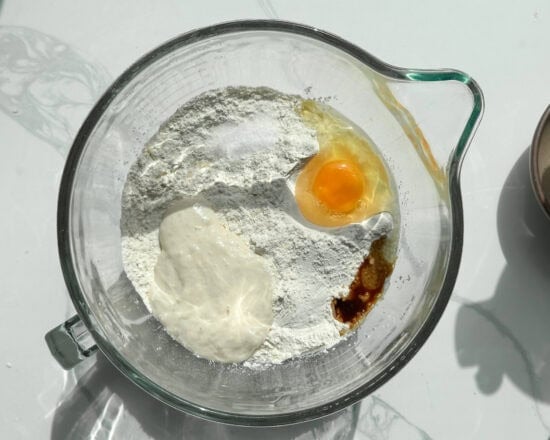
Knead until the dough has cleared the sides of the bowl and is mostly gathered around the dough hook.
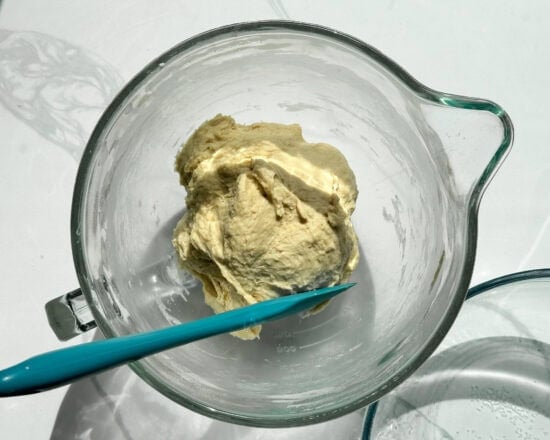
Set it in an oiled bowl for the rise: we’ll do 1-2 hours on the counter (longer if your kitchen is cold) and then set it in the fridge overnight.
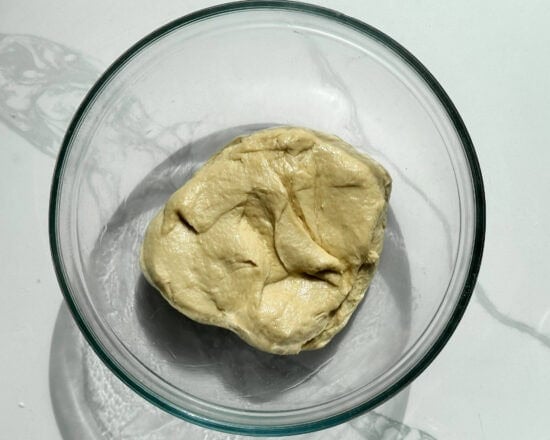
In the morning, check on the dough: it should be about double the size and if not let it sit on the counter at room temperature until it is.
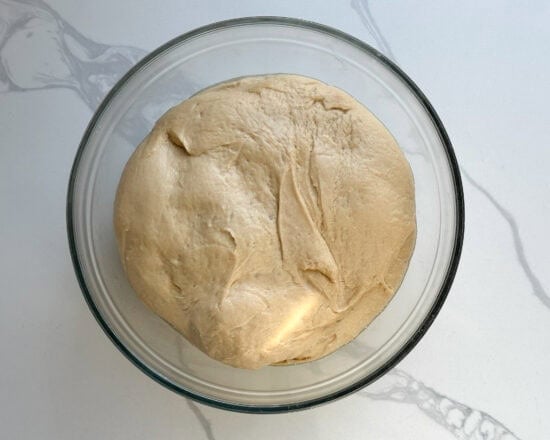
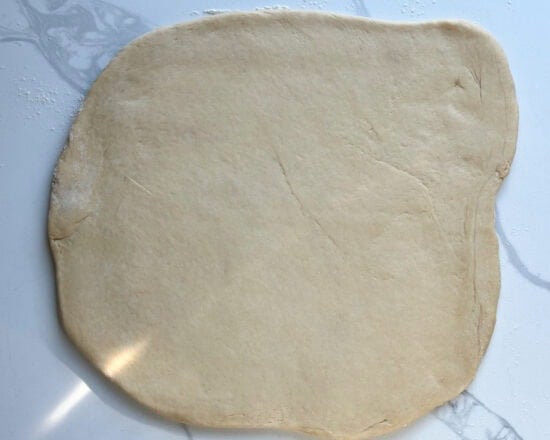
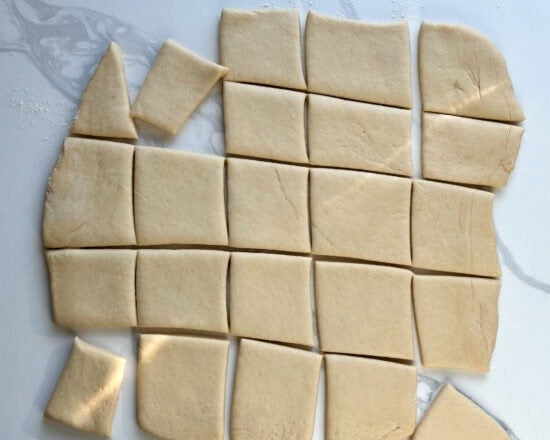
On a well floured surface, roll the dough out into a rectangle shape so it’s a little over a quarter of an inch thick. Slice the dough into squares. Cover with a damp cloth and rest the dough for 30 minutes.
Fry the Beignets
Prep a cookie sheet or two plates with some paper towels, these will capture the excess oil.
Fill a deep frying pan or a pot with oil; it needs to be about three inches deep. Set it over medium to medium high heat and keep an eye on it. When the temperature reaches 360 F it’s ready for frying (but not before!).
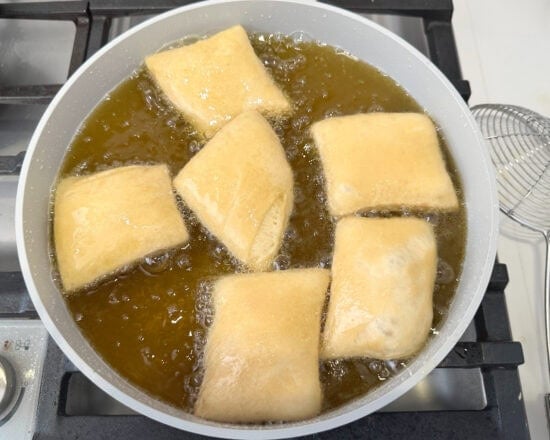
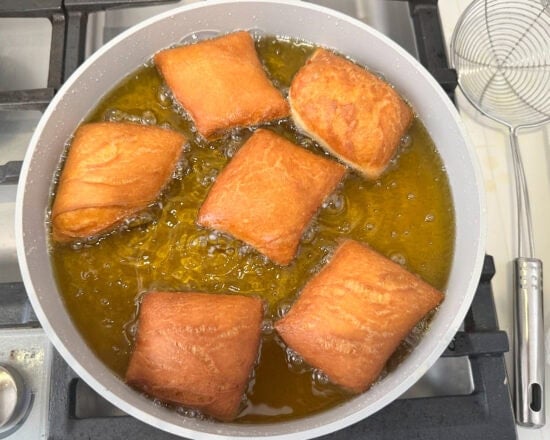
Gently lower one dough piece at a time into the frying pan – keep only four in there at a time. As they fry on the bottom you’ll see the top expand and tear a bit (but it shouldn’t develop any holes). Once they are golden brown on the bottom, turn them over with a spider strainer and fry on the other side until golden brown (a deep warm golden!).
When you’ve fried all the beignets, and want to serve (they’re great hot or at room temperature) , sieve some powdered sugar over them. These don’t keep well, so finish them off!
FAQ
How do I know when one side is done frying?
The ‘cooked’ side should be a deep golden color. I think it’s fine to turn the beignets a few times; but let it puff first on the doughy side while the bottom cooks then you can toss 2-3 times until both sides are cooked.
Some of my beignets are thick and some are hollow, why is this the case?
Thick, dense beignets that don’t have any cavity were likely fried at too low heat. They should be somewhat hollow; it is the heat of the oil that will push the dough apart.
Why are my beignets taking so long to cook/brown?
Your heat is too low. Keep a thermometer handy and check the oil temperature regularly. The beignets will cook best if the oil maintains a 360-370 F range.

Recipe for Sourdough Beignets (with Discard)
Sourdough Beignets
Ingredients
- 120g or ½ cup filtered water warmed
- 120g or ½ cup whole milk warmed to touch
- 1 ½ teaspoon active dry yeast
- 67g or ⅓ cup brown sugar light or dark
- 1 large egg at room temperature
- 125g sourdough discard
- 500g all purpose flour
- 1 teaspoon vanilla extract
- ½ teaspoon fine sea salt
- 4 tablespoons butter unsalted and softened
- Canola oil for frying
- Powdered sugar for topping
Method
- Note: I make this dough the night before and set it in the fridge overnight.
- In the bowl of a stand mixer, add the warm water (120g or ½ cup) and warmed milk (½ cup or 120g). Whisk in the active dry yeast (1 ½ teaspoon) and leave for a few minutes so the yeast can dissolve.
- Add the brown sugar (67g or ⅓ cup) and whisk to combine. To the bowl add the egg, discard (125g), all purpose flour (500g), vanilla (1 teaspoon) and salt (½ teaspoon). Affix the dough hook and turn the mixer on low as it begins to knead the dough. Once it starts coming together, add the softened butter. Knead until the dough comes around the dough hook in a ball(ish) shape and the bowl is mostly clean of dough.
- Transfer to an oiled bowl, toss the dough around to coat with the oil, and leave at room temperature for about 1-2 hours, just enough time for the dough to begin to rise but not enough for it to double in volume. Set in the fridge overnight.
- In the morning, take the dough out - if it has doubled it's ready to use. If not, let it sit at room temperature until it’s puffy.
- Once puffy, roll it out on a well floured countertop (preferably near the stove so you can transfer the dough easily) until it’s rectangular and a little over a quarter of an inch thick. Use a pizza or pastry roller knife to slice into roughly 2-3 inch squares (depending on how well shaped the rectangle was, some will be bigger and some smaller - this is ok). Cover the dough with a damp cloth and leave to rest for about 30 minutes.
- Use a deep frying pan (about 4 inches deep) or a dutch oven to fry the beignets. Set the pan over medium high heat and fill with canola oil until it’s about 3 inches full. Have a thermometer handy, bring the oil to 360 F. Don’t start frying before the oil is this hot or the beignets will absorb too much oil as they struggle to cook.
- Lay a few sheets of paper towel over a cookie sheet near you (this is where the beignets will go after frying).
- One at a time, carefully drop in a piece of dough - fry only 4 at a time. The top of the dough will tear as it warms and rises. Once the bottom is golden brown, use a spider strainer to flip the beignets so they cook on the other side. If you find you want them darker, you can flip again once the tops (now bottoms) have cooked. Once both sides are a deep golden brown, transfer to the paper towels.
- Repeat with the rest of the dough, adding no more than four at a time. Once all the dough is cooked, you can transfer the beignets to a plate and dust with the powdered sugar.
- The beignets are best eaten the day of making!
Did you make this recipe?
Share & tag me on instagram @buttermilkbysam


