Chocolate Olive Oil Cake
An incredibly soft one layer chocolate olive oil cake. This cake is so moist, it does not need a topping though it can be dressed up with cream and berries.
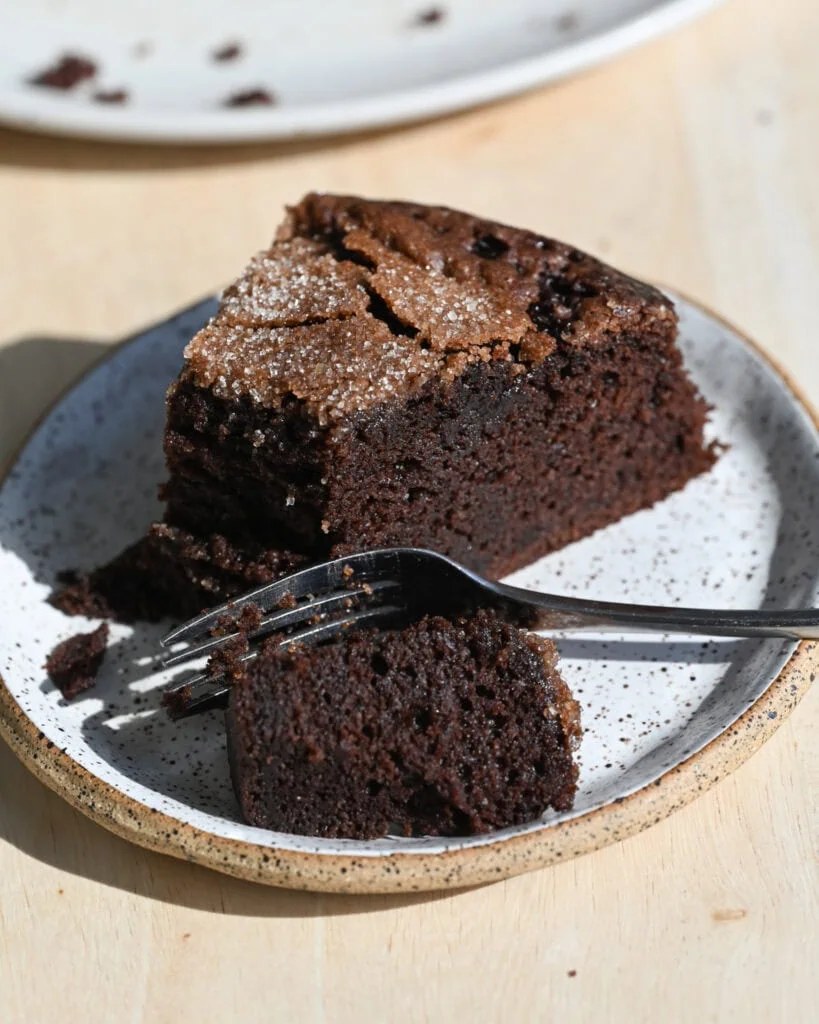
This is easily the most moist (moistest?) chocolate cake I’ve ever made and I just know you’re going to fall in love with it like we did. It’s not purely chocolate, the olive oil flavor is prominent too, and it isn’t an overly sweet cake. It is, however, rich, soft and delicious.
Recipe Origins
This is a chocolate adaptation of Samantha Seneviratne’s olive oil cake. Hers has a bit of lemon added and it’s a fabulous cake, so moist (stays moist!). I made it recently and got to wondering if I could turn this into a chocolate cake without compromising the moisture level as cocoa will usually dry out a bake. I got to work testing how much cocoa I could add, keeping the integrity of the cake, balancing it with the flour, and ultimately switched to buttermilk to balance acidity and moisture.
Once I had my perfectly moist chocolate olive oil cake, I contemplated toppings. Honestly, it doesn’t need one. Most layer cakes need something between the layers or on top to balance the cake but this one is perfect on its own.
That said, I do have some ideas for how to top it if you plan to serve it as more than a simple chocolate cake.

Recipe Ingredients
Eggs: large and at room temperature. I’ll ask you to warm them if you haven’t before you start making the batter. Warmer eggs will beat easier and quicker with the sugar.
Sugar: fine granulated. It’s quite a bit of sugar for a one layer cake but this is partly what makes the cake so moist. It is not an overly sweet cake though it is thick (more like two cake layers).
Salt: fine sea salt. If using table salt, halve the amount as it has more sodium and will taste saltier.
Vanilla: pure extract. If you don’t have it you can skip it. Don’t use imitation vanilla here.
Olive oil: you will taste it so use something you like! I use extra virgin and prefer the ones imported from palestine or lebanon (I find them at middle east grocery stores).
Cocoa: dutch process. Using natural cocoa powder will alter the rise and flavor of the cake.
Leavening: both baking powder and baking soda will rise the cake.
Flour: all purpose, any protein content is fine (but don’t use bread flour).
Buttermilk: full or low fat (I haven’t noticed a difference). If you can’t find it, opt for a plain kefir. Avoid homemade concoctions with milk + acid as the ph of these is usually higher and they lack the added creaminess (fat).

How to make Chocolate Olive Oil Cake
Warm your eggs: set them in a bowl of hot water.
Prep the pan & oven: grease with butter or oil, then sprinkle with flour to coat. Alternatively use a baking spray. The pan should be 9 inches round or square.
Beat the sugar and eggs to the ribbon stage:


Add the salt & vanilla, beat:

With the mixer on, slowly pour in the oil, then mix.
Sift in the cocoa then mix to combine:


Add the remaining dry ingredients:

Slowly pour in the buttermilk, while mixing:


If you prefer a sugared topping, sprinkle it on top:


Bake until a cake tester comes out clean.

Topping Options
If you want something a bit fancier for the cake’s topping, I think something light will work nicely here like a vanilla whipped cream or a chocolate whipped cream. Berries would be great on top; strawberries, raspberries, etc.
Alternatively I’d serve it as is but with an ice cream, like this brown butter vanilla ice cream or pistachio ice cream.
Chocolate Olive Oil Cake Recipe
Chocolate Olive Oil Cake
Ingredients
- 3 large eggs at room temperature
- 300g or 1 ½ cups sugar
- ¾ teaspoon fine sea salt
- 1 teaspoon pure vanilla extract
- 200g or 1 cup olive oil
- 55g or ½ cup dutch process cocoa
- 1 teaspoons baking powder
- ¼ teaspoon baking soda
- 175g or 1 ⅓ cups all purpose flour sifted
- 300g or 1 ¼ cups buttermilk full fat
Method
- If your eggs are not yet at room temperature, set them in a bowl of hot water to warm up.
- Preheat the oven to 350 F. Grease and flour a 9 inch cake pan, round or square.
- Set the eggs and sugar in a large bowl and use a hand mixer (you can also do this in a stand mixer) to beat. Beat until the mix is several shades lighter in color, is airy and when you lift the beaters from the mix it falls in ribbons - about 3-5 minutes. Add the salt and vanilla and beat to combine.
- With the mixer on, slowly pour in the olive oil. Beat until fully combined.
- Sift the cocoa into the bowl and beat to combine. Add the flour, baking powder, and baking soda. Start the mixer on low and as you are mixing in the flour, slowly pour in the buttermilk. Once it’s all in, give the bowl a scrape on the sides and bottom and beat to just combine.
- If you will not be topping the cake and want to do a sugar crisp: sprinkle 3 tablespoons of granulated sugar on top.
- Bake the cake until a cake tester comes out clean, about 40-45 minutes. LEt cool briefly in the pan then transfer to a wire rack or plate to fully cool.
Did you make this recipe?
Share & tag me on instagram @buttermilkbysam


Made this for company today and it was so easy and delicious! We wanted something that wasn’t too rich but was GOOD, and this cake fit the bill perfectly. I did the sugar on top before baking, and we actually served with vanilla ice cream just because it ended up being a very hot evening. The cake is perfect on its own, too!
Question- should the sugar for the crunch topping be done before baking as listed in your steps? I would have thought after but wanted to ask to be sure!
Definitely before baking, if you do it after the sugar won’t adhere to the cake!
I am unable to eat dairy. What would you suggest in place of the buttermilk. TIA
I’m trying to bake a 40th birthday cake for a friend who loves chocolate and for twenty people or so. Do you think this would work as a layer cake? I was thinking of using it with your chocolate mascarpone frosting, raspberries and a naked frosted look maybe.
I do! A few things: is a bit delicate and moist though so you’ll want to handle it carefully when frosting; it does dome a bit so you can use cake strips or just slice off the hat, and skip that sugar topping you won’t need it. Also – you’ll need much more for 20 people, maybe two cakes?
Hey Sam! I’d love to make this, and just wanted to check on the pan size. I have a 9″ round cake pan (removable bottom, I use it for 2-layer cakes), a 9″ springform pan (use it for cheescake), and a 9×9″ square baking pan (I use it for brownies, blondies, etc). I’m not sure if a 9″ square cake pan is something other than what I have? Since you mentioned the cake is almost a double-layer thickness, I wanted to make sure I understand your pan recs fully so I don’t face oven overflow! Which one of the ones I listed do you most recommend? Thanks!
Hi Kate! I think you could use the 9 inch removable bottom/springform if you had a sheet of parchment laid over the pan and scrunched in (so that the batter doesn’t seep through the cracks. My personal choice would be to use the 9×9 square though, no worries about leakage and it’ll come out with straight/clean edges.