Croissant Loaf
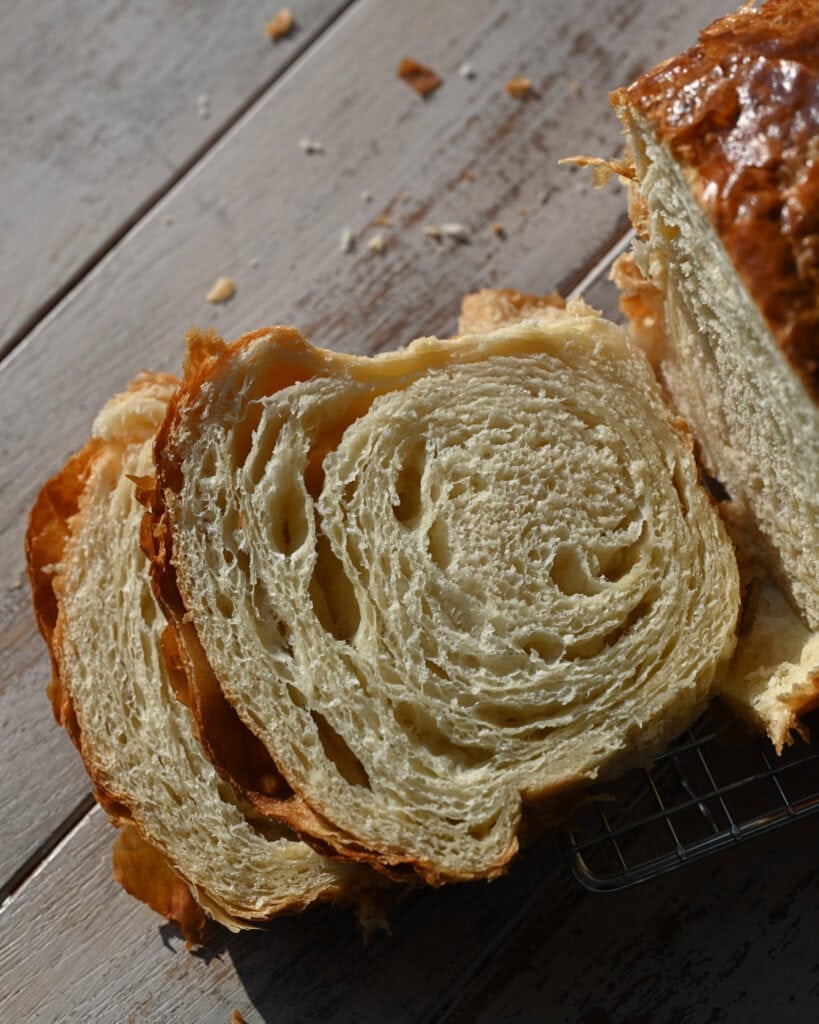
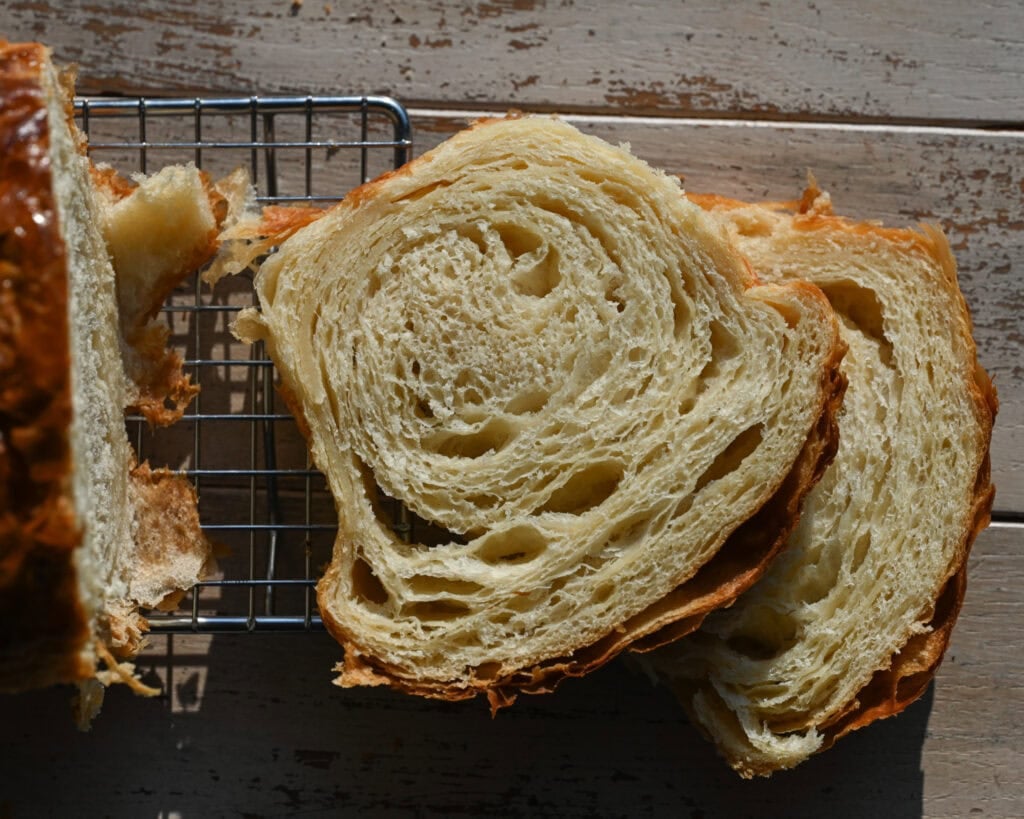
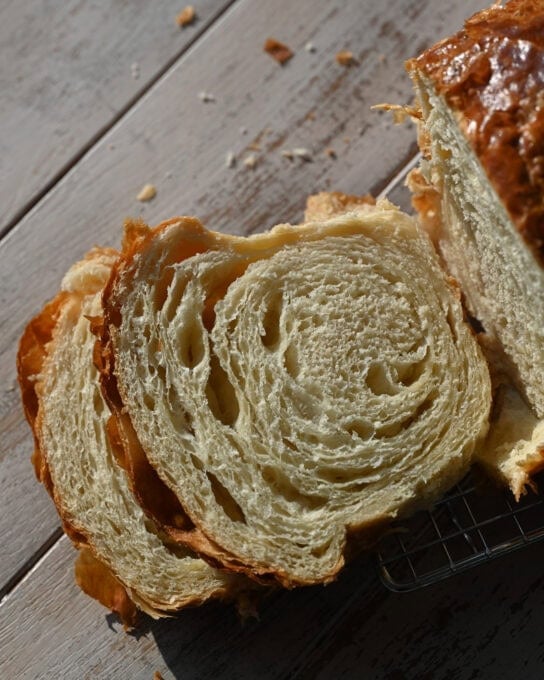
A loaf shaped, sliceable bread with the ultra flakiness and buttery layers of a croissant.
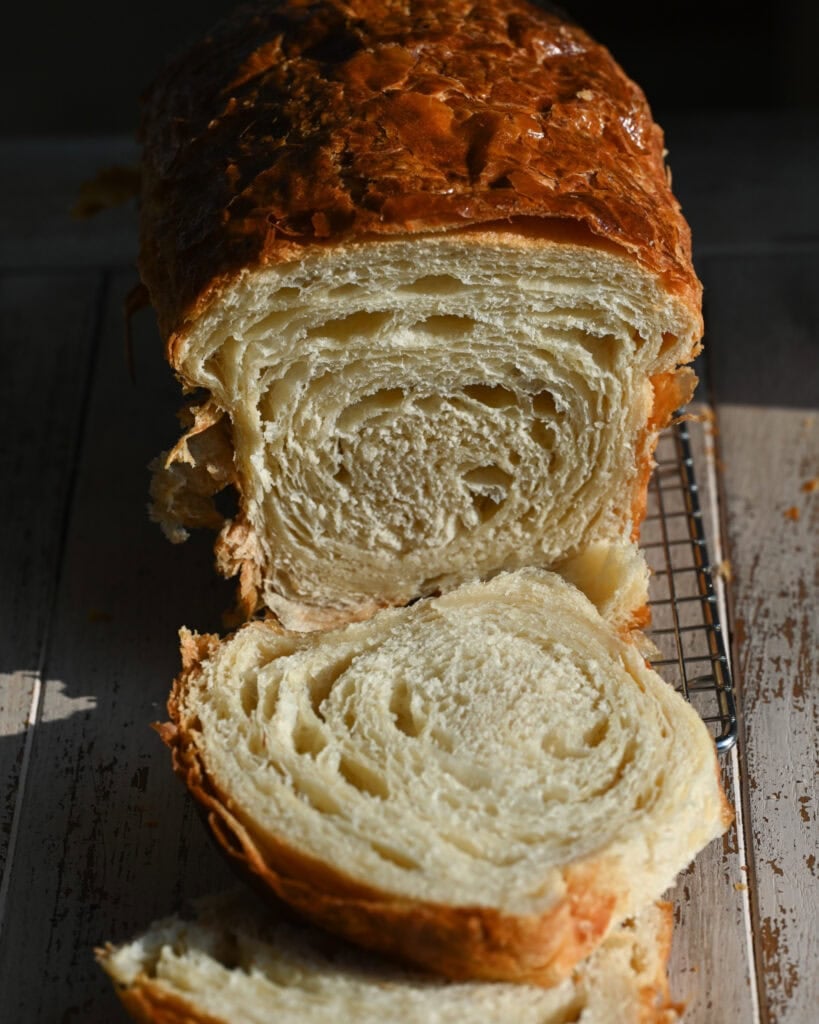
I have been wanting to give you a croissant bread recipe for years, since I saw (and bought and ate, heh) a loaf by La Boulangerie at my local grocery store. Over the years I’ve tried doing this via making a croissant dough and shaping it into a loaf and making a brioche dough and laminating it to get those flaky layers, it wasn’t until I had nailed a butterflake roll recipe that I knew I finally had the perfect dough to turn into a sliceable croissant bread.
Recipe Ingredients
Milk: whole milk, 2% works too.
Yeast: I use Active Dry, but instant yeast works too.
Sugar: this helps activate the yeast and very gently sweetens the rolls.
Flour: all purpose, of a medium to high protein content. I use bob’s red mill or arrowhead mills. I did try this recipe with bread flour but found the rolls were tougher.
Salt: fine sea salt. If you are using table salt, halve the amount added.
Potato flour: a bit of a wildcard ingredient but it’s so good here! Adding potato flour really tenderizes the bread rolls.
Butter: unsalted, you’ll use some in the dough itself and most of it for the ‘butter block’ which we’ll use to laminate the bread rolls.
Water: just a bit, added only as much as needed to get a soft dough.
Egg wash: an egg yolk mixed with some milk or heavy cream. Brushing this on the dough before it bakes helps it brown and turn shiny.
How to make a Croissant Loaf Bread
Make the dough
We’ll knead the dough in a stand mixer so pour the warmed milk into the mixer bowl and whisk in the yeast.
-> giving time for the yeast to bloom (the mix should turn foamy) lets us know that the yeast is good to use.
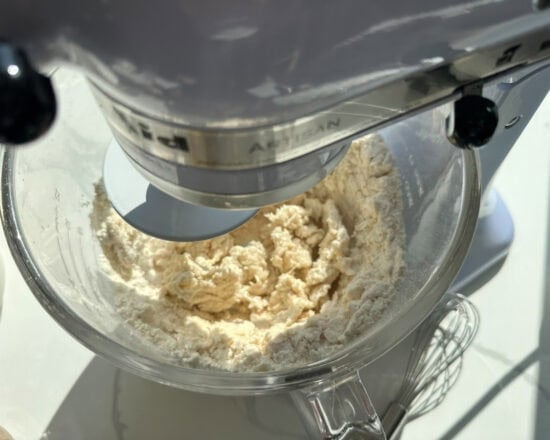
Add the sugar, flour, potato flour, and salt to the bowl and affix the dough hook attachment.
Begin kneading the dough on low, then work up to medium speed: as the dough starts to come around the dough hook, add the softened butter.
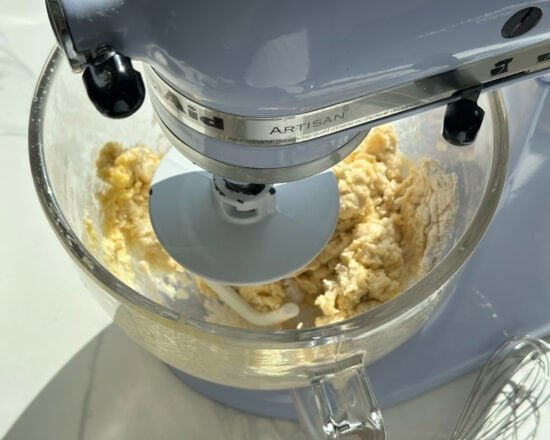
Give the dough time to knead, if you see it looks dry add a tablespoon or two of water. Once it starts to come around the dough hook again it’s done kneading.
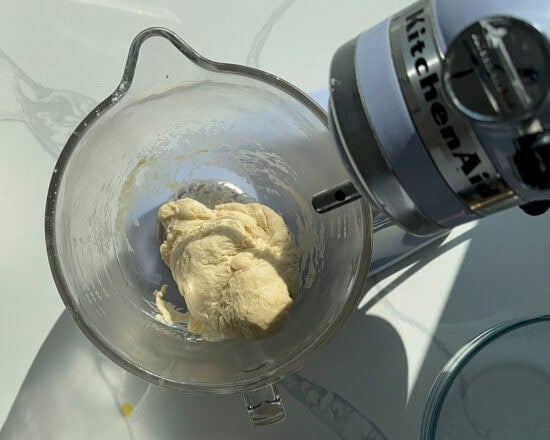
Transfer it to an oiled bowl and cover with plastic wrap.
I leave my dough at room temperature for about an hour or 90 minutes then set it in the fridge for an overnight rest and rise. This prolonged rest accomplishes several things: it gives the dough a longer period to ferment and develop better flavor and it rests the gluten in the dough so that it’s very easy and pliable the next day to laminate.
Laminate the Dough
Make a butter block by slicing a stick of butter horizontally into three strips. Fold a half sheet of parchment paper and lay the strips on the bottom half – leaving a bit of space between them. Fold the parchment down and use a combination of your hands and a rolling pin to press the dough into a thin rectangle that’s about 9×7 inches. Set in the fridge to firm up.
Roll out the well-rested dough on a well floured countertop (this dough is sticky and thin, use flour to prevent it from sticking) so it’s a little over double the size of the butter block.
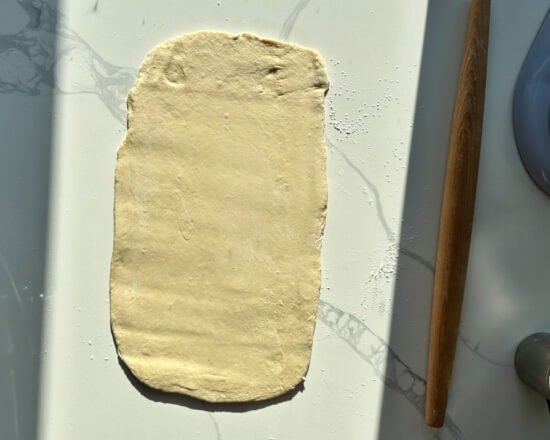
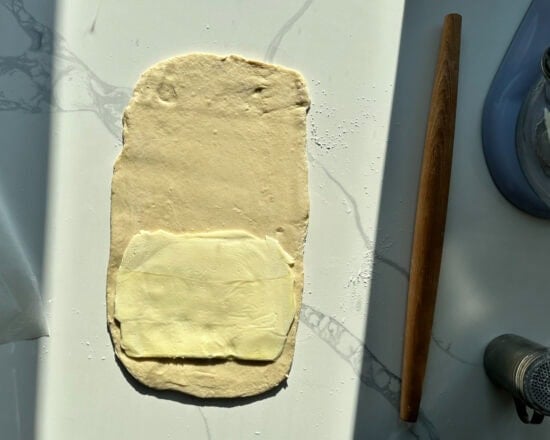
Peel one side of the parchment paper off the butter block and place it face down on the bottom half of the dough (center the block so there’s a bit of dough on the sides). Fold the dough down, over the block and press the edges to seal it:
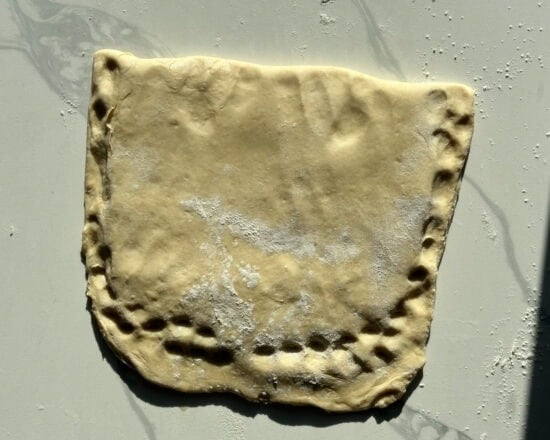
Roll the dough out to twice its size and fold it in half: this will help with any uneven dough.
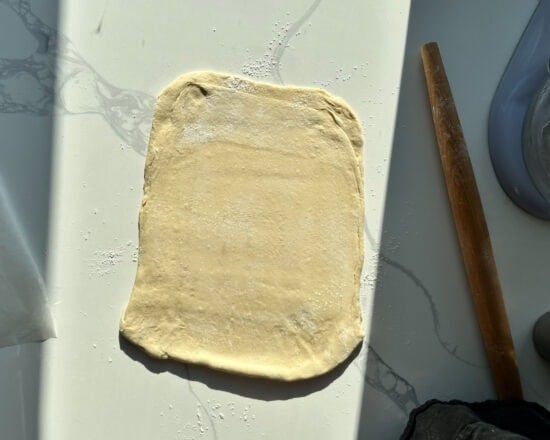
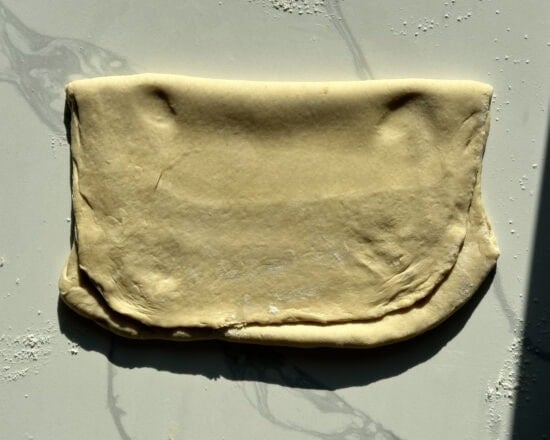
Now roll it out again to a bigger rectangle and perform a letter fold: bottom up and top down:
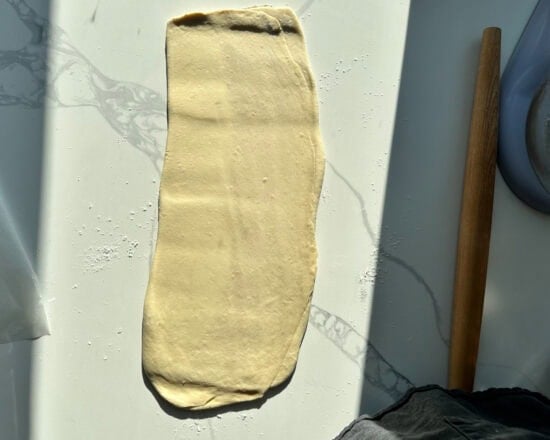
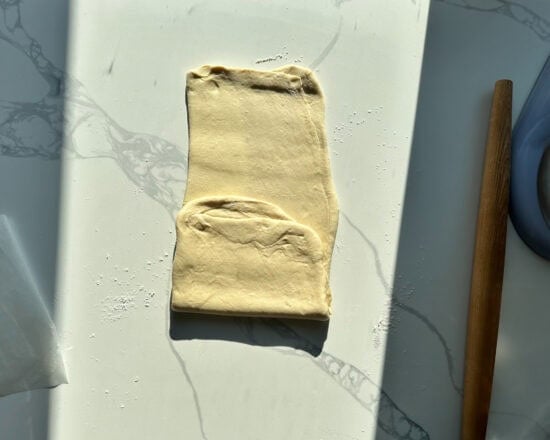
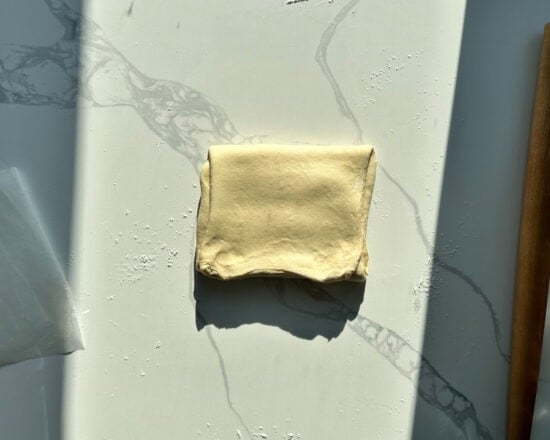
Turn the dough so the shorter side is closest to you then roll it out again and perform a second letter fold.
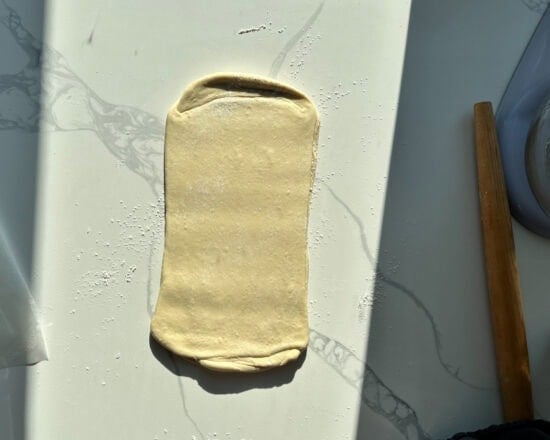
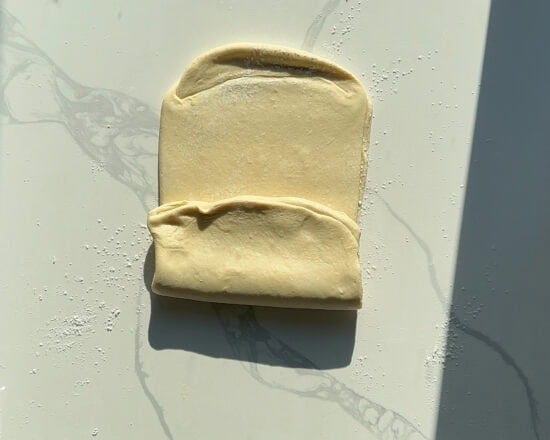
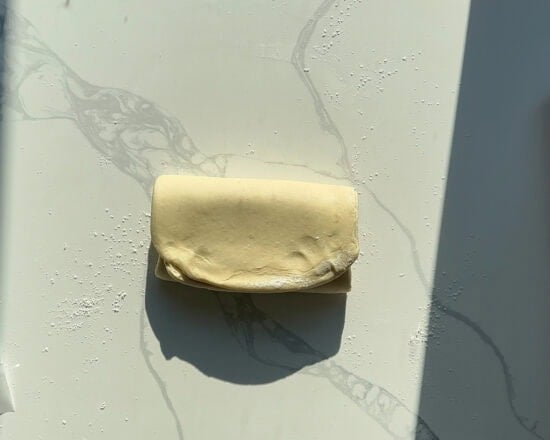
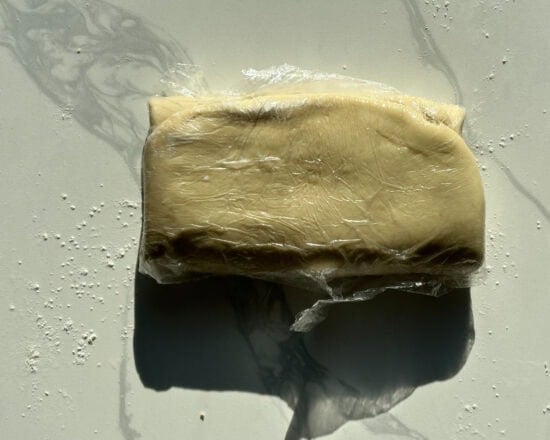
The dough needs time to rest now so wrap it up and set it in the fridge for 1-2 hours.
Shape and Bake the Loaf
Prep a loaf pan (light metal, standard size) by rubbing all the sides with a flavorless oil. Let the dough sit at room temperature for about 10 minutes, so the butter can soften.
>> If you see butter bits breaking as you roll, it’s too cold. Cover it and leave it to warm slightly before rolling.
Roll out the rested dough, the countertop should be very well floured (this is a sticky dough!) into a long rectangle: the shorter side should be the size of the longer side of your loaf pan (so around 9 inches) and the longer side can be up to 30, you want it as long as you can get it without it resisting or tearing.
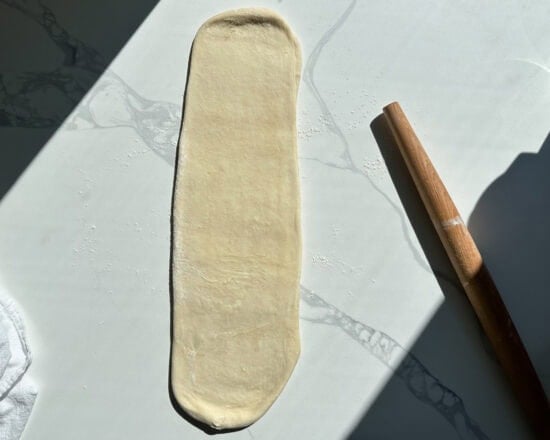
Now roll this up into a log the size of the loaf pan: roll tightly.
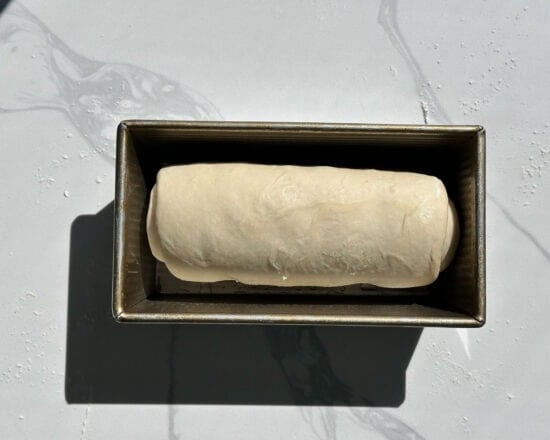
Set the log into the prepared loaf pan and cover with a damp tea towel.
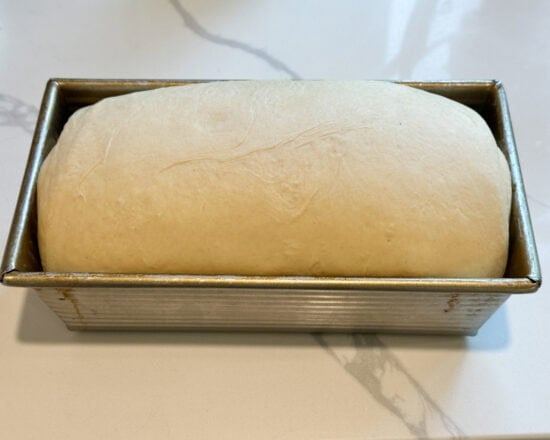
Let rise until you can poke it and the indentation remains (it shouldn’t bounce back right away). The dough should be at least half an inch above the rim of the pan.
Whisk together the egg yolk and milk (or cream) then brush the top of the dough with the egg wash.
Bake the loaf in an oven preheated to 350 F, until it turns a deep golden color. A good way to check the inside doneness of bread is to use a thermometer; it’s done when it’s above 190 F.
Croissant Loaf Recipe
Croissant Loaf
Ingredients
- 240g or 1 cup whole milk warmed to touch
- 1 ½ teaspoon active dry yeast
- 2 tablespoons sugar fine granulated
- 325g or 2 ½ cups all purpose flour
- 1 teaspoon fine sea salt
- ¼ cup potato flour
- 57g or ¼ cup unsalted butter softened (or partially melted)
- Water as needed
- 113g or ½ cup salted or unsalted butter softened (for the butter block)
- 1 egg yolk for the egg wash
- 1 tablespoon milk for the egg wash
Method
- Make the dough: add the warmed milk to the bowl of a stand mixer and whisk in the yeast. Leave it for a few minutes to bloom. Add the sugar, flour, salt, and potato flour to the bowl and affix the dough hook attachment. Knead the dough on low until it starts to come together around the dough hook, then add the butter and knead. If the dough looks a bit dry, add a tablespoon or two of water. Continue kneading until the dough once again comes around the dough hook and feels tacky. Set the dough on a countertop and knead by hand until smooth, just a minute or two. Transfer the dough to an oiled bowl and leave to rise at room temperature for about an hour, then transfer to the fridge for an overnight rest.
- Prep the butter block: use a half sheet of parchment paper (9x13 inches) folded in half. Slice the butter horizontally into three pieces so you have three long rectangles and arrange them into the bottom half of the parchment paper. Fold the top half of the paper over the butter and use a rolling pin to press and roll the butter to (mostly) fill the parchment. Set in the fridge to chill and firm.
- Laminate: After a long rest and chill, the dough should be very pliable. Take the butter block out of the fridge for 5 minutes, just to warm very slightly. Flour the counter well and turn the dough onto it. Flour the top as well (this is a sticky, thin dough). Roll out the dough so it’s just over twice the size of the butter block. Set the butter on the bottom half of the dough and fold the top half of the dough over it. Press the edges of the dough (the three sides) to seal in the butter.
- Roll the dough out to twice its size and fold it in half. Turn the dough so the shorter side is now facing you and roll it out again, this time into a very long rectangle - flour the dough often with a thin layer so it doesn't stick, and avoid pushing the dough so far that it starts to resist. Aim for about 30 inches long and 10-12 inches wide. Now we’ll do a letter fold: fold the bottom third up then the top third over. Sprinkle with flour and roll the dough out again so you can perform one more, smaller, letter fold. The dough will start to resist now so it’s time for it to rest: wrap it in plastic wrap and set in the fridge for at least an hour (up to two).
- Shape the loaf: Let the dough sit at room temperature for 10 minutes. Rub a standard size (9x5 inch) metal loaf pan with oil. On a well floured countertop, roll the dough so it’s about 9 inches wide and as long as you can get it (without too much resistance), it should be around 30 inches or so. Roll up the dough so you have a 9 inch log and place it, seam side down, in the prepared loaf pan. Cover with a damp towel and leave to rise at room temperature.
- Bake the loaf: When you can press the top of the dough and it does not immediately spring back, it’s ready to bake. Preheat the oven to 350 F. Whisk together the egg yolk and milk then use a pastry brush to brush the top of the loaf with the egg wash. Set a cookie sheet under the loaf in the oven to catch any leaking butter. Bake the loaf until it’s deeply golden, about 40 minutes. Let cool in the pan. Sometimes the sides will stick to the pan, shimmy an offset spatula between the baked loaf and the pan to loosen it. The bread will be crispy the day it’s baked and will gradually soften. Store leftovers in an airtight container or freeze.
Did you make this recipe?
Share & tag me on instagram @buttermilkbysam


