Apple Cider Basque Cheesecake
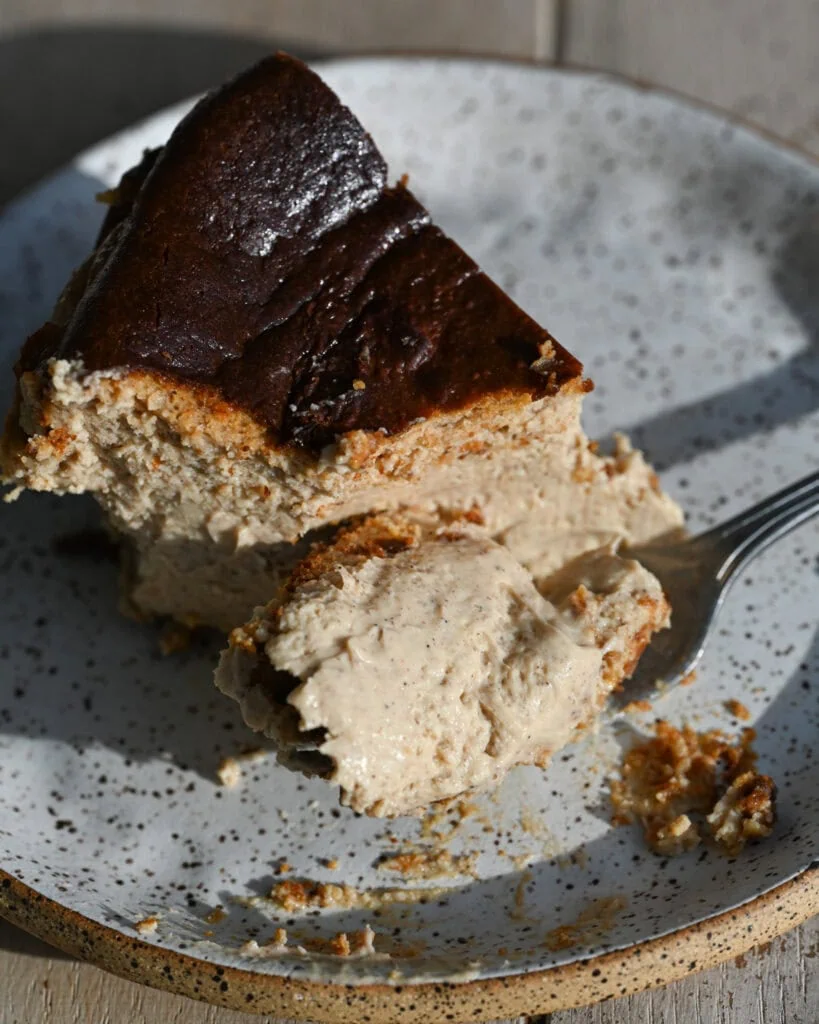
Creamy and thick burnt basque cheesecake made with reduced apple cider and warm fall spices.

It seems only fitting that my first recipe foray into basque cheesecake is an apple cider variation, since my first cheesecake recipe on this blog was an apple cider cheesecake. I love the flavor of cider and can think of nothing more iconic of fall than a warm cup of cider.
Making a basque cheesecake is like throwing everything you know about making a good traditional, new york style cheesecake, out the window. It’s going to seem like you’re overbaking the cheesecake, you’re literally going to burn the top (any brown spot on a regular cheesecake is usually shudder worthy) and it will rise then collapse. I have spent so many cheesecake recipes trying to do literally the opposite of all of this so testing this recipe was an enjoyable, if confusing, experience!
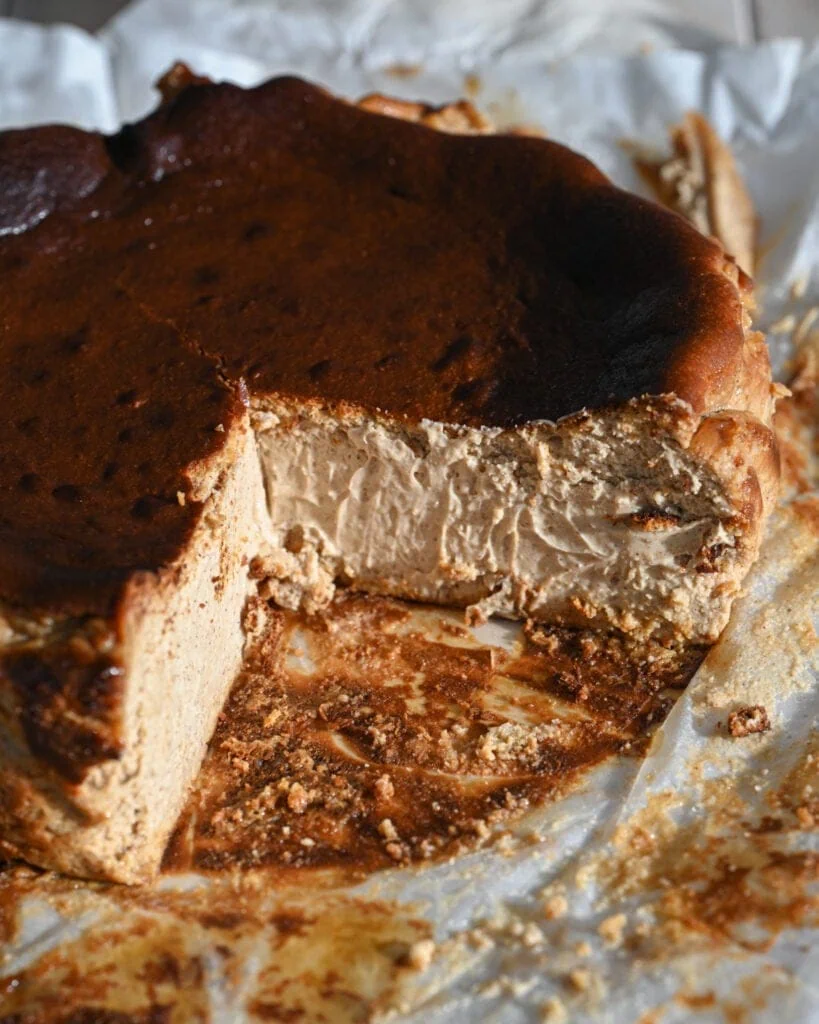
Recipe Origins
The goal with this apple cider basque cheesecake was to make a good basic basque cheesecake, but for it to taste like cider and have all those lovely warm fall spices. I looked at several basque cheesecake recipes finding a pretty consistent ingredient list: three bricks of cream cheese, sugar (this varies, I went with a slightly lower amount because I was adding the cider, I also made it brown sugar), five eggs (I was adamant to reduce this, eggs are expensive and I very much hate an eggy texture or flavor), and somewhere between 1 ¼ – 1 ⅔ cups of heavy cream, plus some starch and/or flour to thicken the cheesecake.
Because I was reducing the egg (after in the first recipe test I did with five eggs, there was no way I wasn’t), I opted to add in sour cream. It adds fat and creaminess in lieu of the missing egg. I went with the higher amount of heavy cream as I wanted a texture that was so smooth and creamy, you could scoop the inside of the cheesecake like pudding.
This is to say: I wouldn’t call this at all a traditional basque cheesecake. It is very much adapted to my own texture/flavor goals: spiced, strong with a cider taste, outer structure but a really creamy inside.
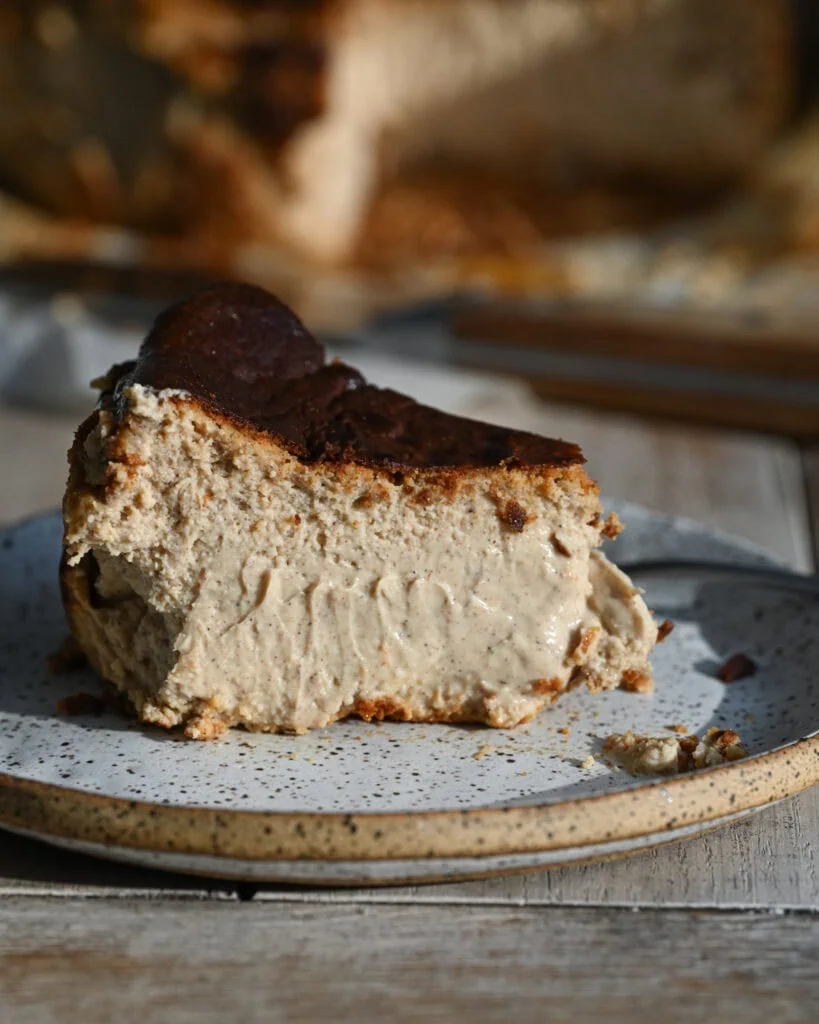
Recipe Ingredients
Fresh apple cider: unfiltered apple juice. This is not apple cider vinegar and it is not apple juice. There is one ingredient on the bottle: apples.
Cream cheese: full fat, brick style cream cheese. I like Philadelphia. It is very important to bring the cream cheese to a warm room temperature.
Sour cream: full fat. Also bring it to room temperature.
Cinnamon: ground, add more if you like.
Allspice: ground, add more or less if you like or substitute with a pumpkin spice.
Salt: fine sea salt.
Vanilla: vanilla bean paste or pure vanilla extract. You can also scrape a vanilla bean’s caviar into the batter.
Sugar: dark brown sugar. Light works too!
Eggs: whole large eggs, at room temperature.
Cornstarch: or tapioca starch. This thickens the cheesecake.
Flour: also aids in thickening the cheesecake but to a slightly lesser degree.
Heavy Cream: or heavy whipping cream. Do not use light cream.
How to Make Apple Cider Basque Cheesecake
Boil down the cider
Set the cold fresh cider in a pot over medium high heat. It’ll take at least 45 minutes to boil it down fully; we’re looking for it to be a fraction of its original volume and have a thicker consistency.
Once it’s in the process of reducing, make sure it doesn’t go over 220F or it can start to ‘candy’ and will be difficult to incorporate into the batter.
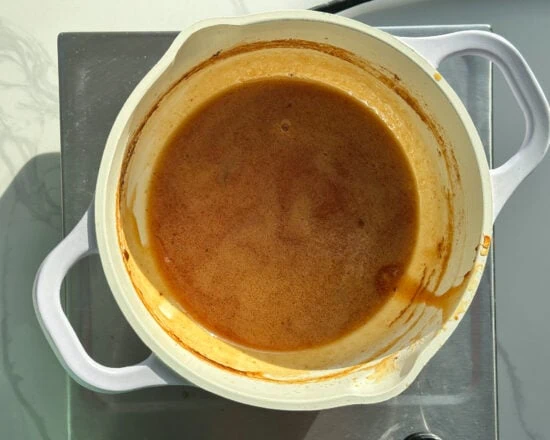
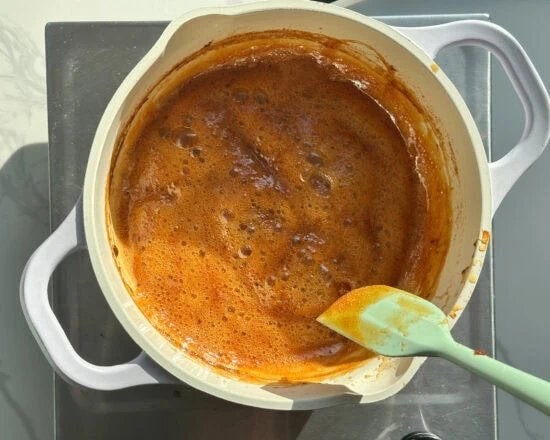
You can do this up to two weeks ahead of time, keep it in the fridge in a sealed container.
Prep the pan
We’ll bake it in an 8 inch (9 inch works too, the cheesecake might be done sooner) metal springform pan. Layer two sheets of parchment into the pan, pressing and creasing them so they hug the inside of the pan as much as possible.
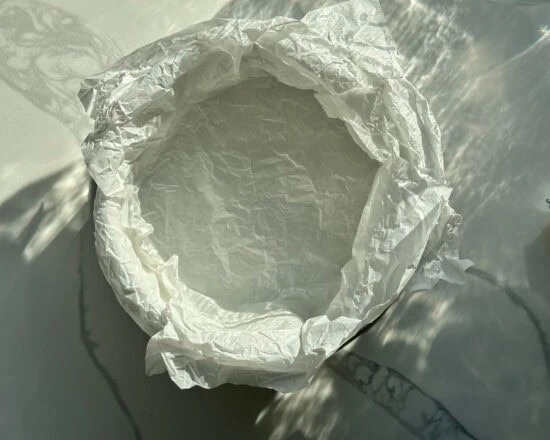
> sometimes creasing up the parchment before placing it into the pan works better.
Preheat the oven to 400 F.
Make the cheesecake batter
The cream cheese should be very soft; hopefully you’ll have taken it out of the fridge an hour or two earlier.
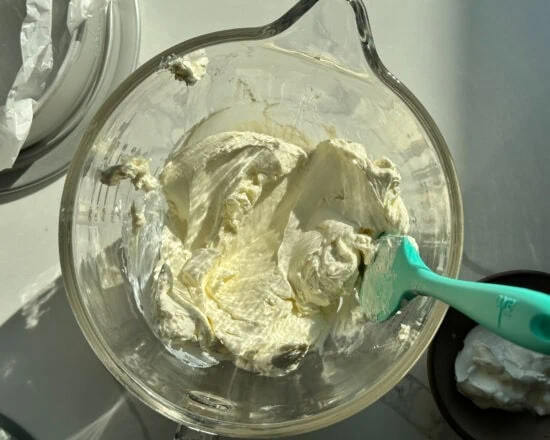
Set the softened cream cheese, sour cream, spices, salt, and vanilla in the bowl of a stand mixer and affix the paddle attachment (the whisk will whip too much air into it!).
Beat on low, we don’t want to overmix it so keep it on low, for a few minutes until the flavorings are incorporated into a smooth cream cheese.
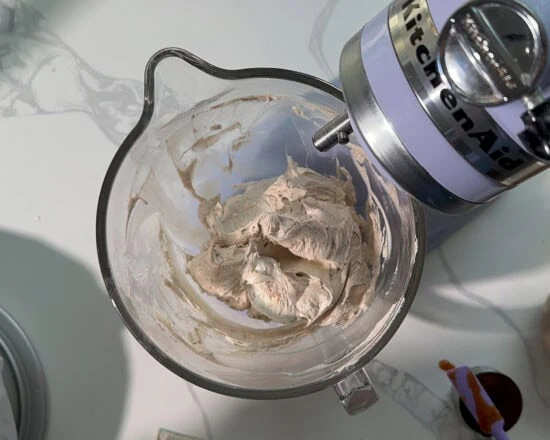
Add the sugar and reduced cider and beat again, on low to just incorporate.
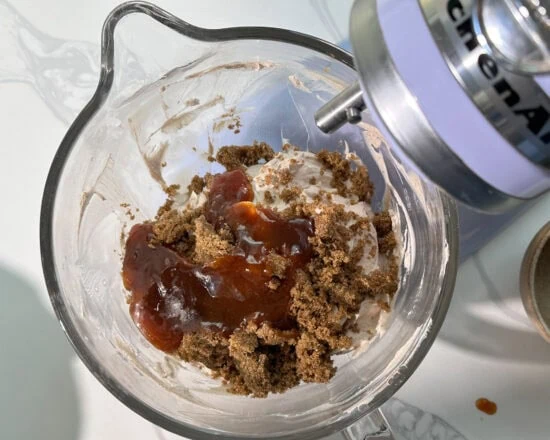
Separately, beat the eggs with a fork or an immersion blender to break them up into a smooth liquid.
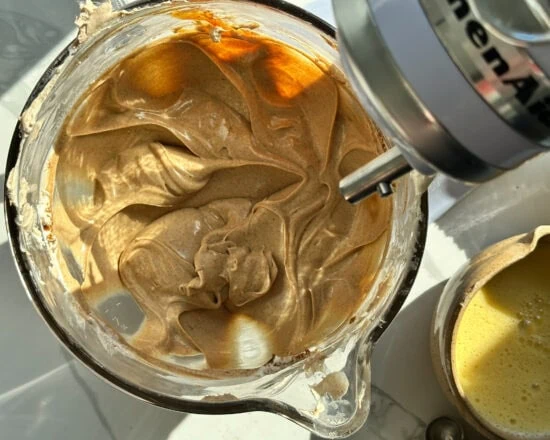
Add to the cheesecake batter with the cornstarch and flour. Turn the mixer on low and while it’s beating, slowly add the heavy cream.
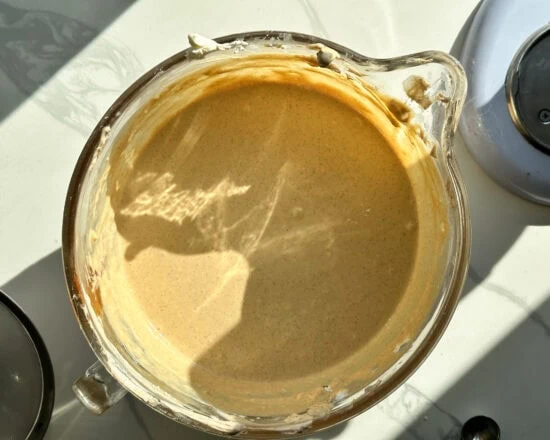
Stop as soon as the mix is smooth.
Set a sieve over the parchment-lined pan and pour the batter through it. This will remove any lingering lumps so we have a perfectly smooth cheesecake.
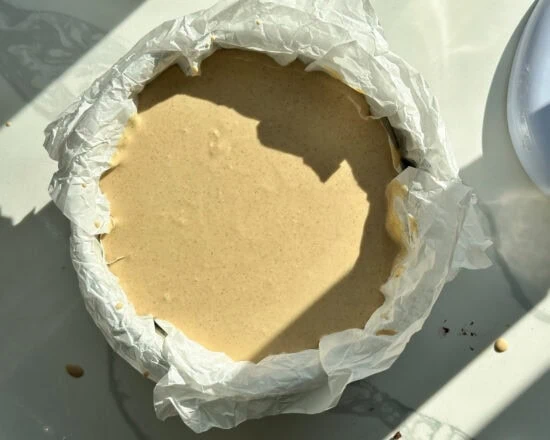
Bake
Set the cheesecake on the middle rack of the oven and bake until the top turns a very dark brown, bordering on black, the cheesecake has risen quite a bit and still has some jiggle in the center. You can check the internal temperature with a thermometer: it’s done at 150 F.
Let the cheesecake cool on the counter then set it in the fridge overnight.
To unmold it: pop open the ring on the pan, lift it then gently pull the parchment from the sides.
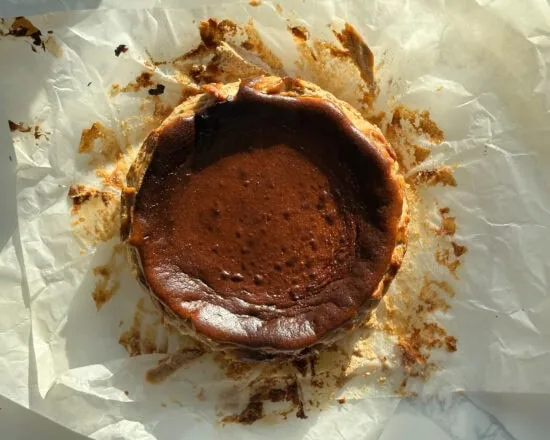
Serving and Storage Info
The cheesecake should be made the day before serving so it has a chance to cool and set.
Use a sharp knife to slice it. I personally don’t think it needs any toppings but fresh fruit could be good here (macerated apples?!).
Keep leftovers in the fridge where they’ll last for 3-5 days.
Apple Cider Basque Cheesecake Recipe
Apple Cider Basque Cheesecake

Ingredients
- 960g or 4 cups fresh apple cider to be boiled down to a thick syrup (see below)
- 678g or 3 bricks cream cheese at room temp very soft
- 120g or ½ cup full fat sour cream
- 2 teaspoons ground cinnamon
- 1 ½ teaspoons allspice
- ¾ teaspoon fine sea salt
- 1 tablespoon vanilla extract or paste
- 200g or 1 cup dark brown sugar
- 100-110g or ⅓ cup reduced cider thick as jelly, from above
- 4 large eggs at room temperature
- 2 tablespoons cornstarch or tapioca starch
- 1 tablespoon all purpose flour
- 400g or 1 ⅔ cups heavy whipping cream
Method
Do ahead: boil down the cider
- Set the fresh apple cider in a large pot over medium high heat. Add a tablespoon or two of mulling spices if you like. Cook the cider as it boils then comes to a rolling boil and starts to reduce. Boil down to a fraction of its original volume, you’re looking for a thick syrup like texture. You can do this step as early as a week or two ahead of time. Store the boiled cider in the fridge, sealed.
- ***It’s important to not reduce it then boil it to the candy point or you’ll have too thick of a syrup to add to the cheesecake batter.
Prep
- Hours before making the cheesecake, set the cream cheese on the counter to come to room temperature. The sour cream and eggs should be brought to room temperature but won’t need as long to warm.
- Butter or grease an 8 inch springform pan (it should be 3 inches tall, or use a 9 inch springform pan) then lay a sheet of parchment paper into the pan, pressing it into the sides and scrunching it in as needed. Lay another sheet of parchment over the pan so that all sides are covered, press it in - use metal clips to hold the parchment if needed.
Make the cheesecake
- Preheat the oven to 400 F.
- Set the cream cheese, sour cream, cinnamon, allspice, and salt in the bowl of a stand mixer. Affix the paddle attachment and begin mixing on the lowest speed: the goal is not to whip any air into the cream cheese but to soften and mix the spices into it. Once it’s creamy, add the sugar, vanilla, and reduced cider. Beat on low again, to just combine the ingredients together. Stop the mixer to scrape down the sides and bottom of the bowl, to ensure even mixing.
- Separately, whisk the eggs together - use a fork or an immersion blender to break up the eggs and beat until smooth, like you would for an omelet. Add the eggs to the bowl and beat to just combine, also on low speed.
- Pour in the heavy cream, flour and cornstarch and beat until the batter is smooth: stop to scrape down the bowl and mix again.
- Set a sieve over the parchment lined springform pan and pour the cheesecake batter through it, stirring and pressing to get all the batter through the sieve. This will take care of any lumps in the batter that weren’t mixed in.
- Carefully transfer the cheesecake to the oven, on the middle rack. Bake until the top is a deep brown color, the sides are set and there is a noticeable jiggle/wobble in the center, about 45-50 minutes. If you want to check with an instant read thermometer, insert it into the center - the temperature should be about 150-155 F. If you'd like an extra charred top raise the temperature to 425 F for the last five minutes of baking. Let the cheesecake cool fully on the counter, the middle will sink considerably. Once cool enough to handle, transfer to the fridge to chill for about 6-8 hours before serving.
Did you make this recipe?
Share & tag me on instagram @buttermilkbysam


Well balanced, easy to follow. Added a pinch of nutmeg and ground ginger as personal preference. We had to bake for about 60 minutes, since every oven is different, but the flavor was phenomenal.
If we wanted to add a graham cracker crust to this recipe, would we be able to do so?
About how much cider, once reduced, should we be adding to the cheesecake? 1/2 cup? Thx!
it should be about a third of a cup, I have it listed further down in the ingredients